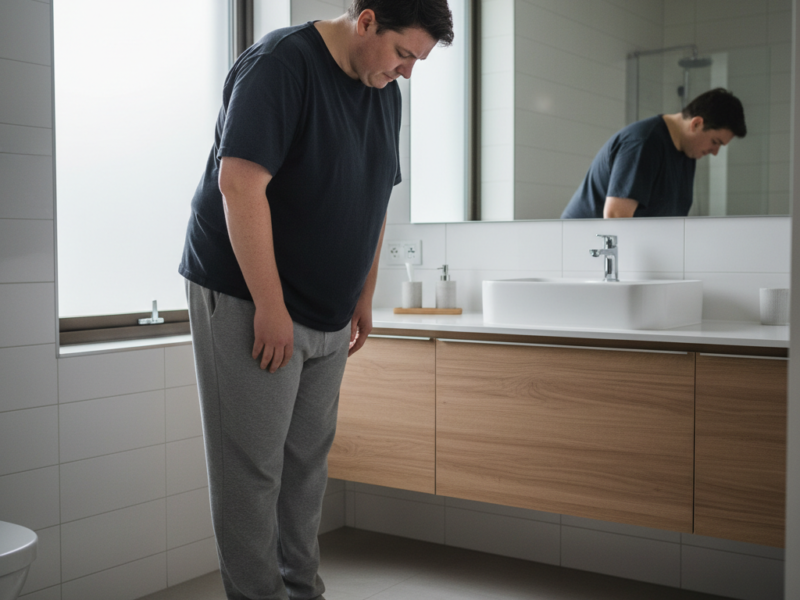
Have you ever reached for a jar of pickles that used to open with a satisfying pop, only to find yourself struggling against a stubbornly sealed lid? Or maybe you have noticed that carrying a full load of groceries from the car feels a bit more challenging than it did a few years ago. If you are over 35, these small moments might not just be a sign of a tough day. They could be early whispers of a process that affects all of us as we age. I am talking about the progressive and often silent issue of muscle loss after 35 sarcopenia, a condition that quietly begins to change our body composition and strength long before we hit our senior years. As a registered nurse, I have seen firsthand how this gradual decline can impact a person’s vitality, and I want you to know that you have significant power to influence its course. Learn more in our guide on Is It Possible to Prevent the Decreasing of Bone Density After Your 30s?.
Understanding Sarcopenia
Let’s start by demystifying the term “sarcopenia.” It sounds clinical and a bit intimidating, but at its core, it simply refers to age-related muscle loss. The word comes from the Greek “sarx” (flesh) and “penia” (loss). While it becomes most noticeable in people over 65, the foundation for significant muscle loss is often laid decades earlier. Research shows that most adults can lose between 3% to 5% of their muscle mass per decade after the age of 30. This process is often so gradual that we barely notice it year to year, attributing small changes in strength or energy to being tired or “just getting older.” Learn more in our guide on Reasons Why You Feel Tired All the Time: Insights from a Registered Nurse.
It is important to understand that sarcopenia is more than just a cosmetic issue or losing your “toned” look. Muscle is your body’s engine. It is metabolically active tissue, meaning it burns calories even when you are at rest. Your muscles are what allow you to stand up from a chair, maintain your balance on an icy sidewalk, lift your child or grandchild, and perform every single physical task throughout your day. When we lose muscle, we are not just losing strength; we are losing a critical component of our functional independence and metabolic health. This loss is often replaced by fat, a change that can alter your body composition even if the number on the scale remains the same. Learn more in our guide on Discover the Health Benefits of Eating Wild Berries: Insights from a Renowned RN.
Think of your muscle mass like a retirement account. In your twenties and early thirties, you are in your peak earning years, easily making deposits. After 35, the body’s natural ability to build and maintain muscle, a process called muscle protein synthesis, becomes less efficient. You start making small, automatic withdrawals. If you do not actively make deposits through proper nutrition and exercise, your balance will slowly but surely dwindle over time. The good news, and the central message I want to share with you, is that you can absolutely continue making those deposits and significantly slow down the withdrawals.
Signs and Symptoms You Should Not Ignore
Because sarcopenia is a slow, creeping process, its early signs can be easy to dismiss. You might not wake up one day feeling dramatically weaker. Instead, you will notice a collection of subtle changes over time. Recognizing these early can be your cue to take proactive steps. As a nurse, I always encourage my patients to become detectives of their own bodies, paying attention to the small clues it provides.
One of the most common early indicators is a general feeling of weakness or a decrease in your overall stamina. Do you find yourself getting tired more quickly during activities that used to be easy, like gardening or taking a long walk? Perhaps you have noticed a change in your gait. A slower walking speed is a surprisingly powerful predictor of future health outcomes. If you find that others are consistently walking faster than you or that you need to take breaks more often, it is worth paying attention. Learn more in our guide on Discover the Surprising Health Benefits of Horseradish: Insights from an RN.
Another key sign is difficulty with everyday tasks. This is where the rubber meets the road. It is the struggle with the pickle jar, the hesitation before lifting a heavy suitcase, or the need to use your arms to push yourself up from a low sofa. You might also experience a loss of balance or feel less steady on your feet, which can increase your risk of falls. This is not just about raw strength; it is about the fine-tuned coordination and power that healthy muscles provide.
Finally, look for unintentional weight loss. If you are losing weight without trying, it is crucial to determine if you are losing fat or precious muscle. Often, with sarcopenia, people notice that while their weight is stable, their body shape is changing. Their arms and legs might look thinner, while their waistline expands. This is a classic sign that muscle tissue is being lost and replaced with fat tissue, a shift that can negatively impact your metabolism and overall health.
What the Science Says
To truly understand how to combat muscle loss, it helps to know what is happening behind the scenes in your body. Sarcopenia is not caused by a single factor but is the result of a complex interplay of several physiological changes that begin in our mid-thirties.
First, our hormones begin to shift. Hormones like testosterone and growth hormone, which both play a vital role in building and maintaining muscle, naturally decline with age in both men and women. This creates a less optimal environment for muscle growth. It is a natural process, but one that makes proactive effort even more important.
Second, our bodies experience something called “anabolic resistance.” This is a key concept. “Anabolic” refers to “building up” processes in the body. As we get older, our muscles become less responsive to the signals that tell them to grow. This means that the same amount of protein in your diet or the same workout you did in your twenties does not produce the same muscle-building response in your forties. Your body needs a stronger signal, both from your diet (especially protein) and from exercise, to kickstart that growth process.
The nervous system also plays a part. The motor neurons, which are the nerve cells that send signals from your brain to your muscle fibers telling them to contract, can decrease in number and function as we age. When a motor neuron is lost, the muscle fibers it controlled can wither away unless they are “rescued” by another nearby neuron. This process can lead to a slow but steady decline in muscle fiber numbers and overall muscle mass.
However, the most significant contributors, and the ones you have the most control over, are lifestyle factors. According to the National Institute on Aging, a division of the NIH, a sedentary lifestyle is a primary driver of muscle loss. When we do not regularly challenge our muscles, our bodies get the message that they are not needed. The old adage “use it or lose it” is profoundly true when it comes to muscle tissue. Combined with a diet that is often insufficient in high-quality protein, this creates a perfect storm for accelerating sarcopenia.
Practical Steps You Can Take Today
Hearing about all these physiological changes can feel discouraging, but I want you to feel empowered. The research is overwhelmingly clear: lifestyle interventions can dramatically slow, and in many cases even reverse, age-related muscle loss. You can start making a difference today with a few focused strategies.
Prioritize Protein
Protein is the literal building block of muscle. If you are not consuming enough, your body simply does not have the raw materials it needs to repair and build muscle tissue, especially when fighting against anabolic resistance. As we age, our protein needs actually increase. A good target for active adults looking to preserve or build muscle is around 1.2 to 1.6 grams of protein per kilogram of body weight (or about 0.5 to 0.7 grams per pound). For a 150-pound person, that is about 75 to 105 grams of protein per day.
Instead of trying to eat it all in one meal, focus on spreading your protein intake evenly throughout the day. Aim for 25-30 grams of protein at each meal (breakfast, lunch, and dinner). This provides your body with a steady stream of amino acids to stimulate muscle protein synthesis. Excellent sources include lean chicken and turkey, fish, eggs, Greek yogurt, cottage cheese, beans, lentils, tofu, and edamame.
Embrace Resistance Training
If protein provides the building blocks, resistance training is the construction crew that puts them to work. This is the single most effective strategy for combating sarcopenia. You must send a powerful signal to your muscles that they are needed, and that signal is stress in the form of resistance. This does not mean you have to become a bodybuilder.
Resistance training simply means moving your body against some form of opposition. This can include:
- Bodyweight exercises: Squats, lunges, push-ups (on your knees or against a wall is a great start), and planks are incredibly effective.
- Resistance bands: These are inexpensive, portable, and perfect for adding challenge to exercises at home.
- Free weights: Dumbbells and kettlebells offer a versatile way to build strength.
- Weight machines: These are great for beginners as they help guide your form and isolate specific muscle groups.
Aim for at least two to three sessions per week, focusing on all the major muscle groups (legs, back, chest, shoulders, and arms). The key is progressive overload, which means you gradually increase the challenge over time. This could mean doing one more repetition, lifting a slightly heavier weight, or reducing your rest time. This is what tells your body it needs to adapt by building stronger, bigger muscles.
Do Not Neglect Overall Activity
While targeted resistance training is crucial, your general daily activity level also matters. A brisk walk, gardening, taking the stairs instead of the elevator, and simply spending less time sitting all contribute to your overall health and help maintain muscle function. Aerobic exercise, like walking or cycling, improves blood flow to the muscles, delivering the nutrients they need to thrive. Think of it as the essential support system for your strength-building efforts.
When to See a Healthcare Provider
While you can accomplish so much on your own, it is also important to know when to bring in your healthcare team. I always tell my patients that their doctor or nurse practitioner is their partner in health. You should schedule an appointment with your provider if you experience a sudden or very noticeable decline in your strength, have frequent falls, or are losing weight without trying.
These can sometimes be signs of other underlying medical conditions that need to be addressed. During your visit, be specific about your concerns. Do not just say, “I feel weaker.” Instead, try, “I have noticed it is much harder to get up from a chair over the last six months, and I have lost five pounds without changing my diet.” This gives your provider valuable information. They can perform a physical exam, run blood tests if needed, and help rule out other issues. They can also be a fantastic resource, potentially referring you to a physical therapist who can design a safe and effective exercise program tailored to you, or a registered dietitian who can help you optimize your nutrition.
Final Thoughts
The journey of aging brings many changes, and the shift in our muscle health is one of the most significant. The process of muscle loss after 35 sarcopenia is real, but it is not a destiny of frailty you must simply accept. It is a challenge you can meet head-on. By understanding what is happening in your body and taking deliberate, consistent action with your nutrition and your movement, you can protect your strength, your metabolism, and your independence for years to come.
Remember to be patient and kind with yourself. Building and maintaining muscle is a marathon, not a sprint. Start where you are, celebrate small victories, and focus on creating sustainable habits. You have the power to invest in your strength today for a more vibrant and active tomorrow. Your future self will thank you for it.
In health,
RN. Julia Weiss Khan
A Supplement Worth Discussing With Your Healthcare Provider
One product worth exploring is Master Full Spectrum Collagen from Master Nutritional. This supplement provides multi-type collagen to support skin firmness, joint integrity, and overall structural wellness.
- Formulated with science-backed, high-quality ingredients
- Designed to support long-term wellness goals
- Available at masternutritional.com
These statements have not been evaluated by the Food and Drug Administration. This product is not intended to diagnose, treat, cure, or prevent any disease. Always consult your physician before starting any supplement.
Frequently Asked Questions
I’m only in my late 30s. Isn’t sarcopenia something that only happens to very elderly people?
That’s a very common thought, but the gradual loss of muscle mass, known as sarcopenia, can actually begin as early as our mid-30s. While the effects are subtle at first, this process accelerates as we age, so being proactive now is the best way to maintain your strength and independence for years to come.
Do I have to start heavy weightlifting at the gym to stop muscle loss?
Not at all! The key is simply challenging your muscles with resistance training, which can include bodyweight exercises like squats and lunges, using resistance bands, or lifting light to moderate weights. The goal is consistency, aiming for two to three sessions a week to effectively signal your body to build and maintain muscle.
How much does my diet really matter for preventing sarcopenia?
Your diet plays a huge role, and protein is the most important nutrient for your muscles. Think of it as the essential building block for muscle repair and growth. We recommend spreading your protein intake throughout the day, making sure to include a good source like lean meat, dairy, or beans with each meal.
Besides just feeling weaker, what are the other health risks of losing muscle?
Losing muscle significantly increases your risk for falls and fractures because it affects your balance and stability. It also slows down your metabolism, which can lead to weight gain, and can make it harder for your body to manage blood sugar levels, increasing the risk for type 2 diabetes.
Is doing a lot of cardio, like running or cycling, enough to protect my muscles as I age?
While cardio is fantastic for your heart and lung health, it doesn’t effectively stop age-related muscle loss on its own. You really need to incorporate specific strength training to directly stimulate muscle fibers to grow stronger. A balanced routine with both cardio and resistance training is your best bet for overall health as you get older.